
 Barda
Where it started
My electronics and tools gear is around a hundred small items spread across bags and boxes. Before every project, I'd spend a quarter of an hour looking for a soldering iron or an ESP32 board.
What I did
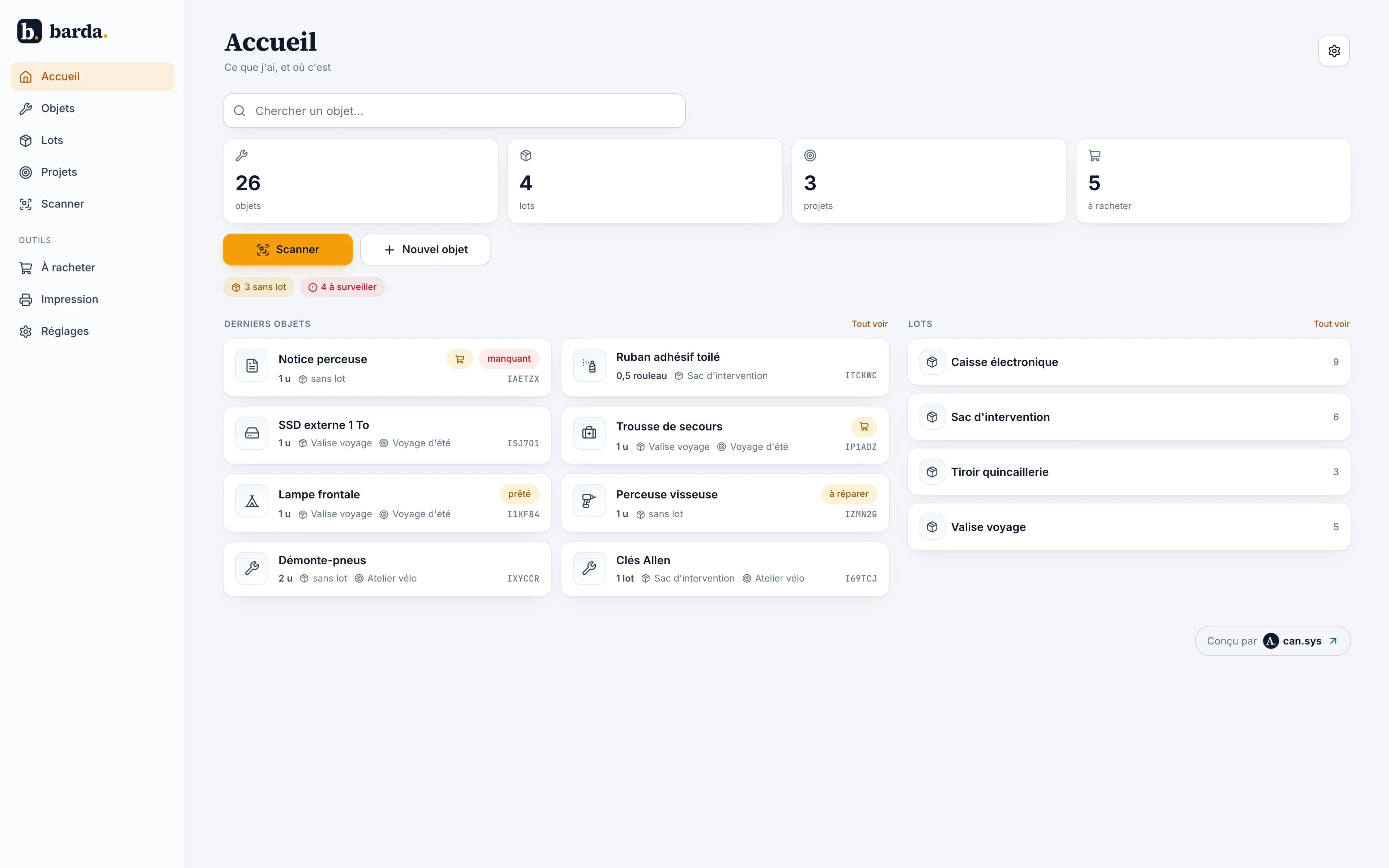
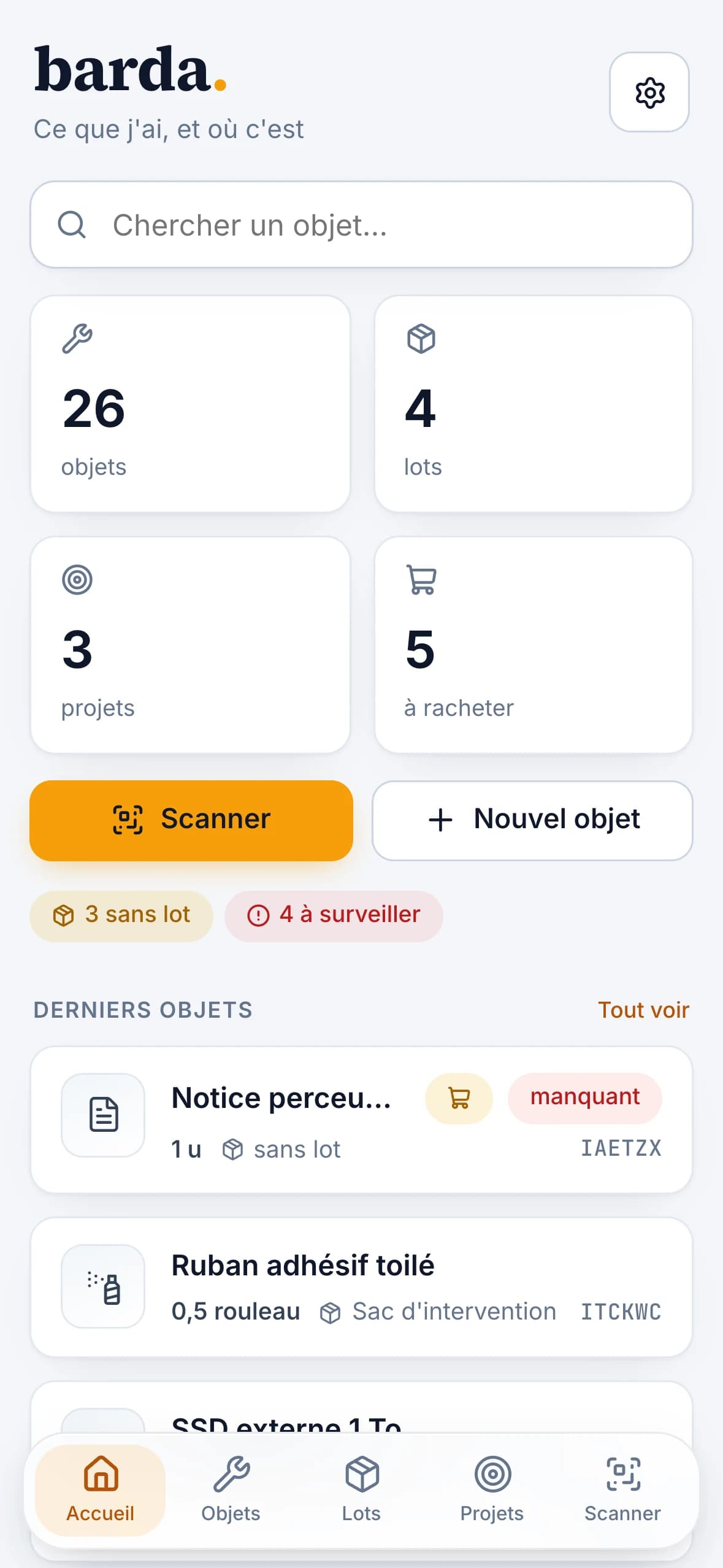
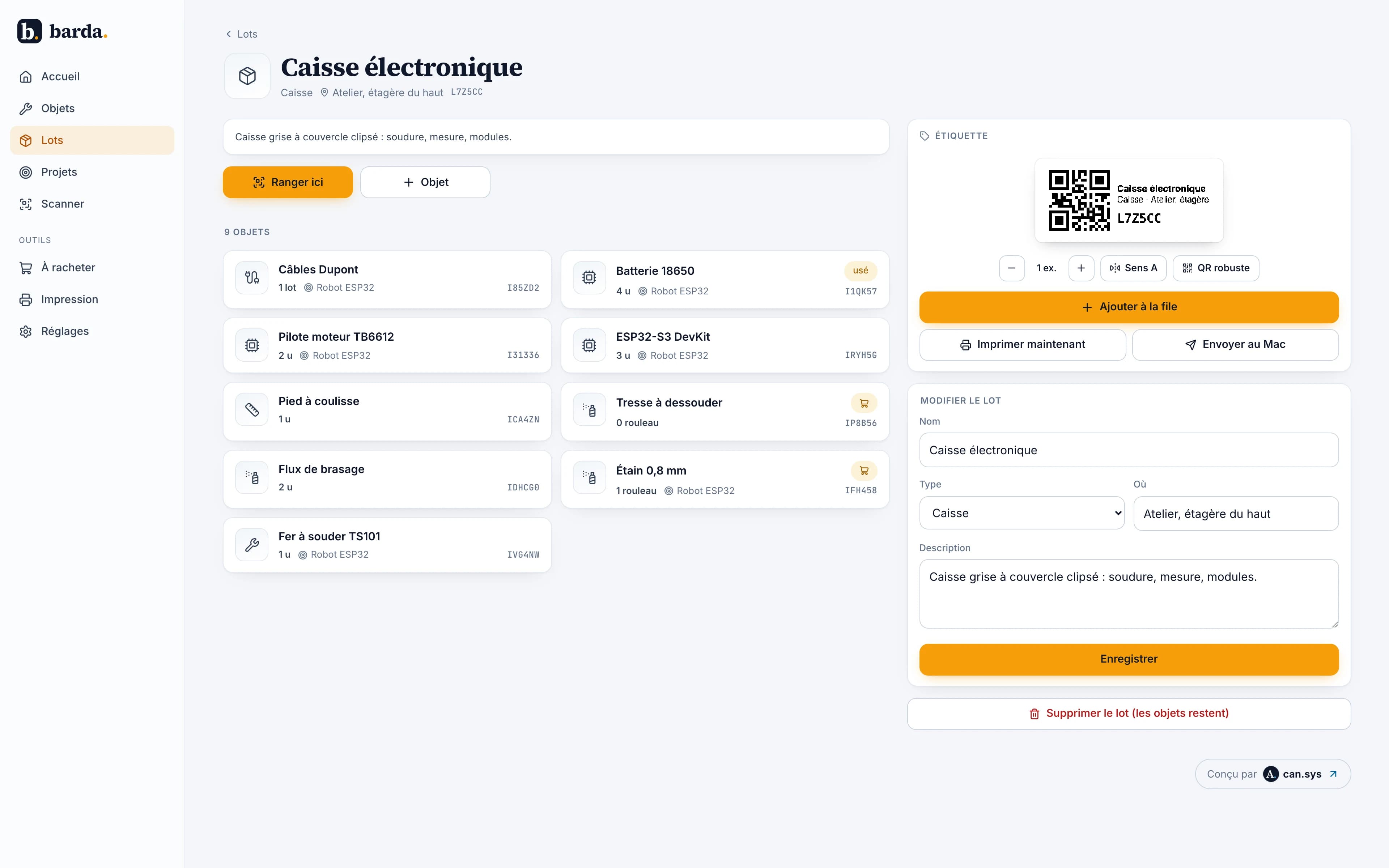
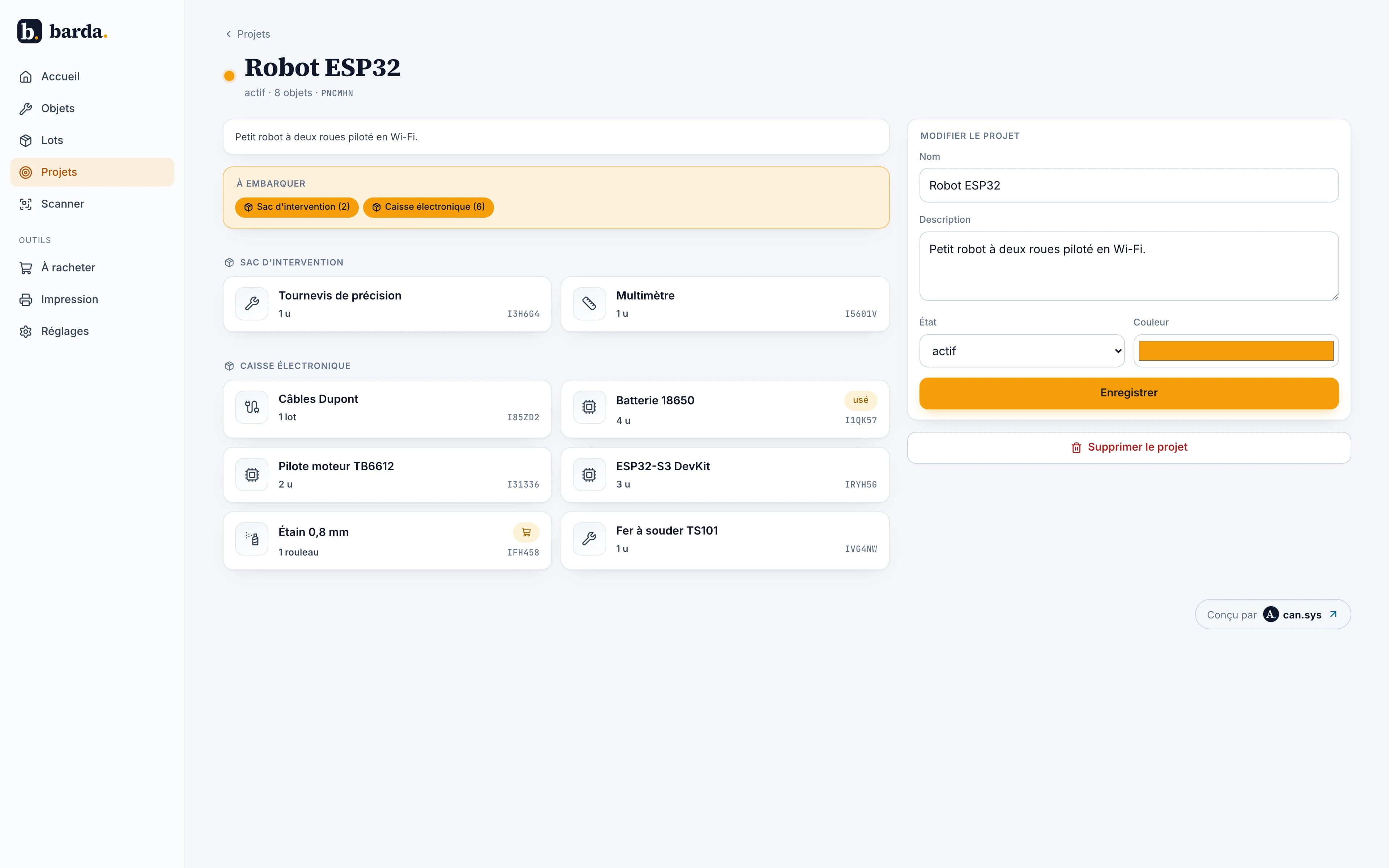
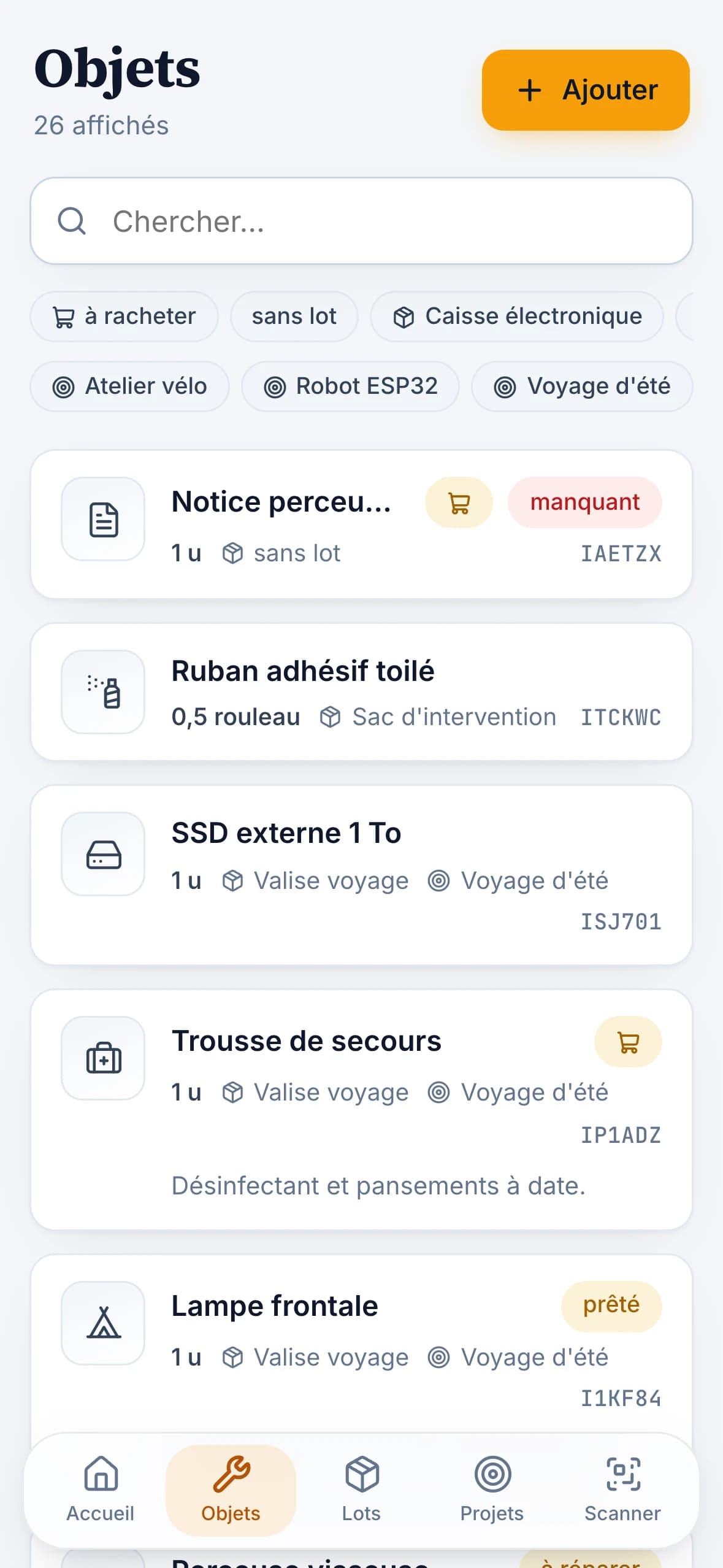
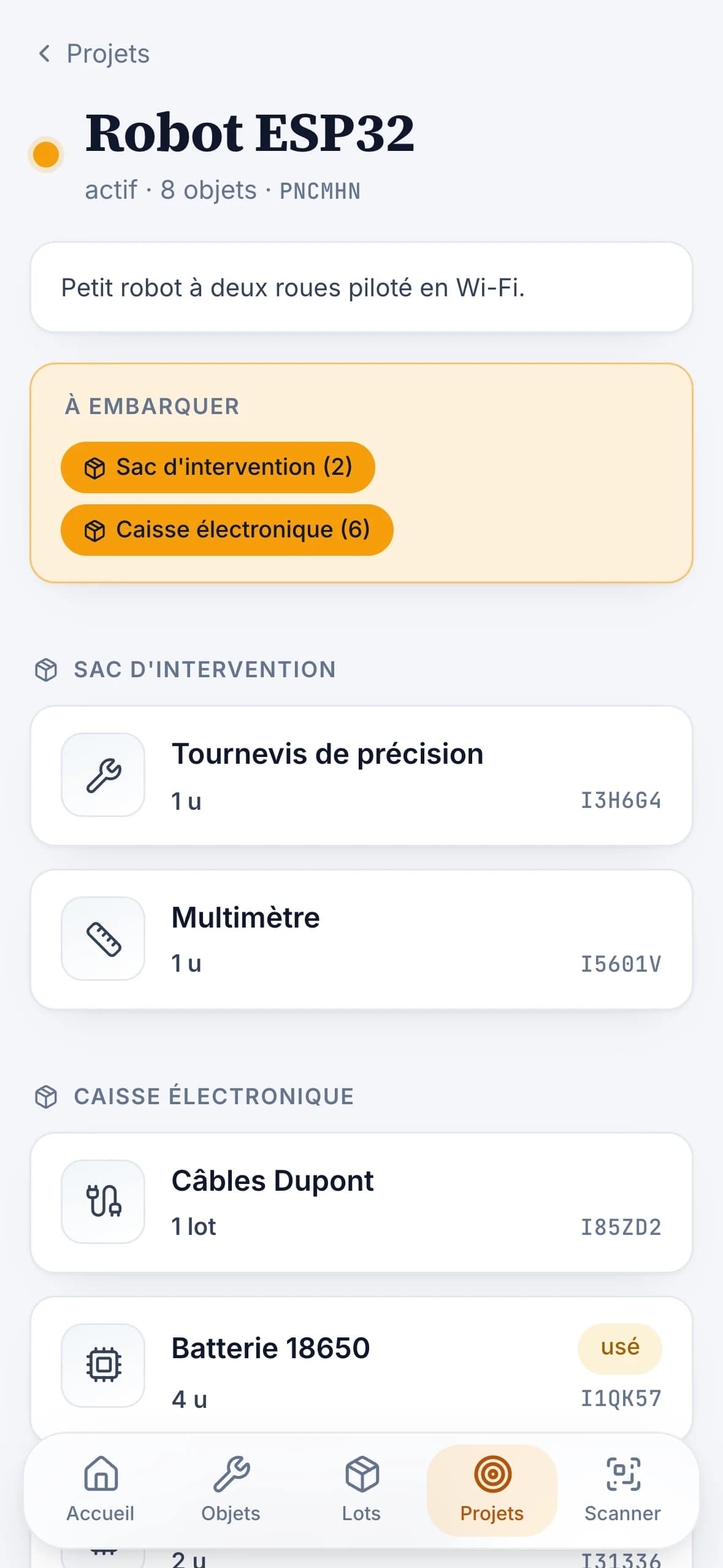
Just three concepts: items, kits (the bag, the box, the drawer) and projects. A project's page answers the only question that matters before heading out: which kits do I take.
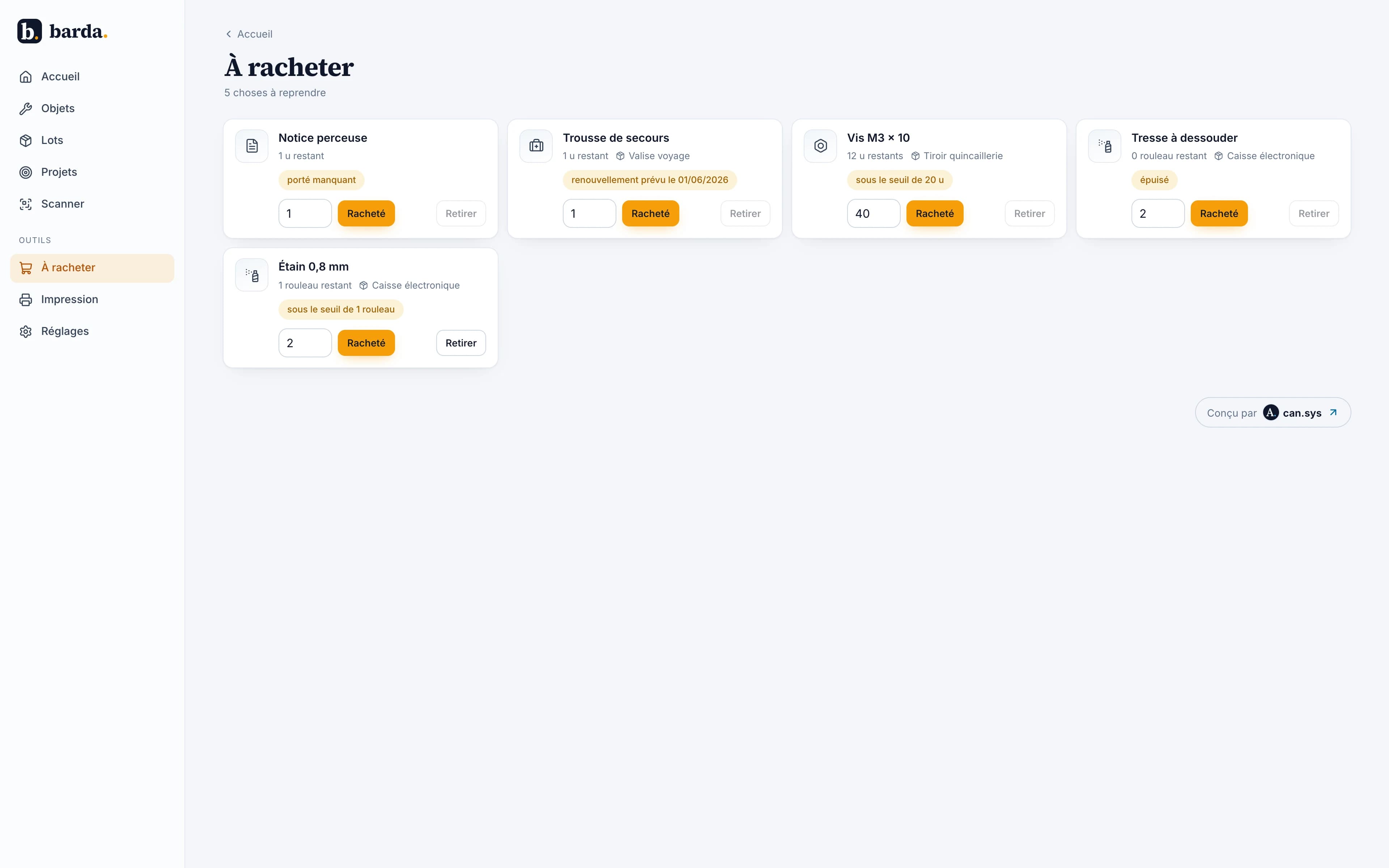
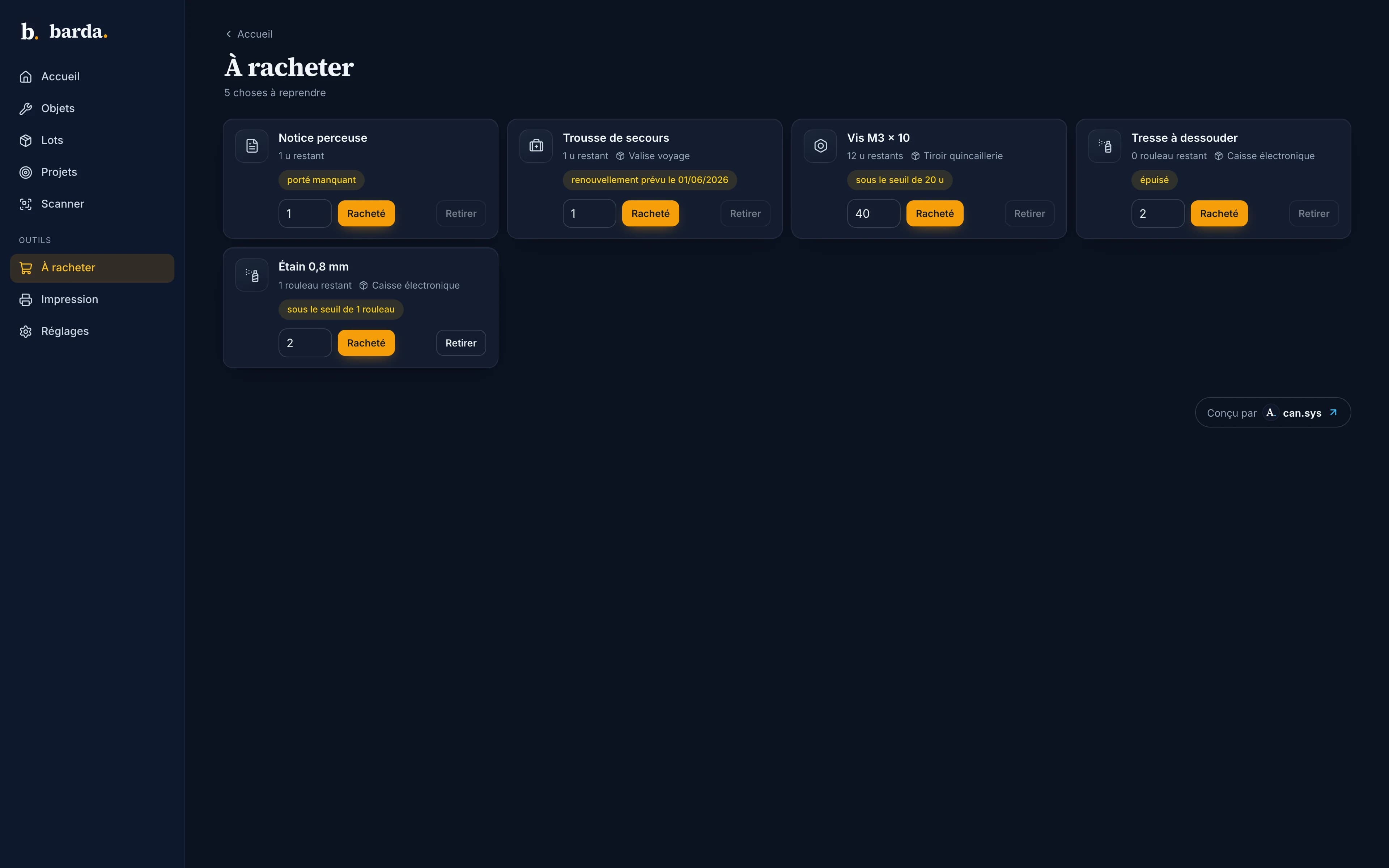
The QR code holds only the item's short code, not a web address. On a 12 mm label, that makes its modules 32% bigger and raises error correction from 7 to 25%. The shopping list fills itself in when a stock level drops below its threshold.
Printing
Safari gives web pages no access to Bluetooth. So a small iPhone app shows the site and lends it a CoreBluetooth driver for the label printer, a Fichero D11s; in Chrome, the site goes straight through Web Bluetooth. The label is drawn on the web side, and the app only passes it on.
Open source
Since November 2026, both repositories are public under the MIT licence. Printers are described in a registry: supporting another Bluetooth label printer takes a driver, without touching anything else.
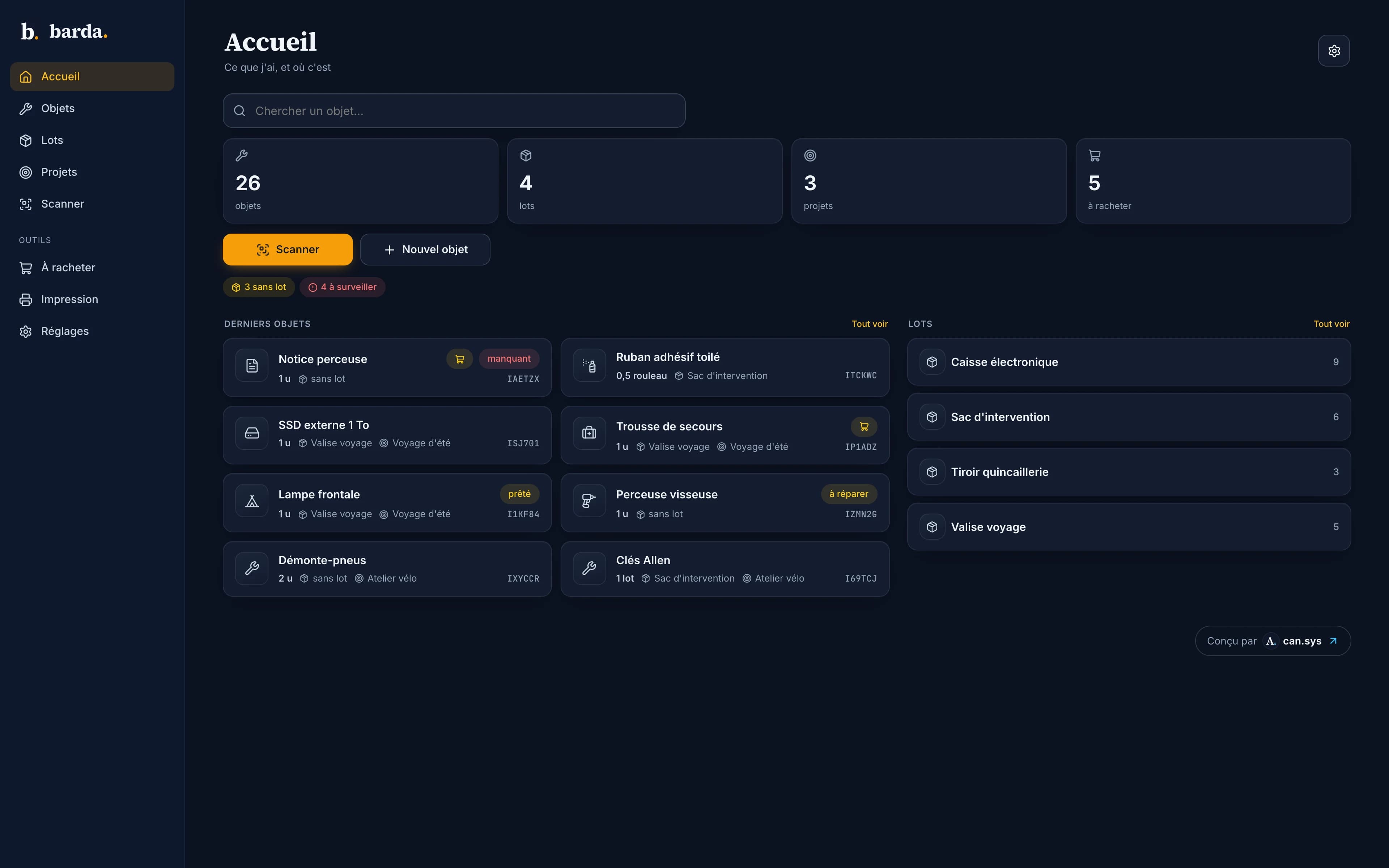
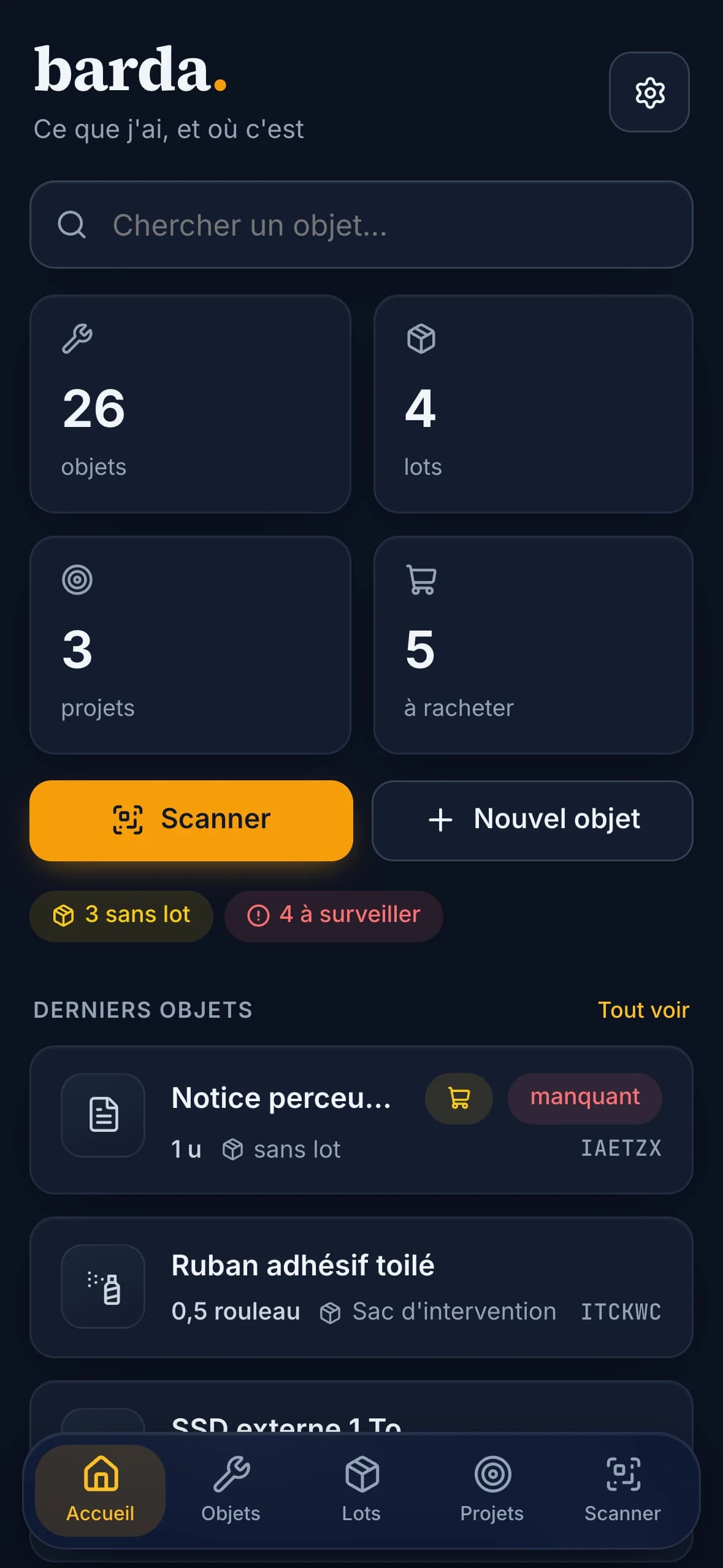
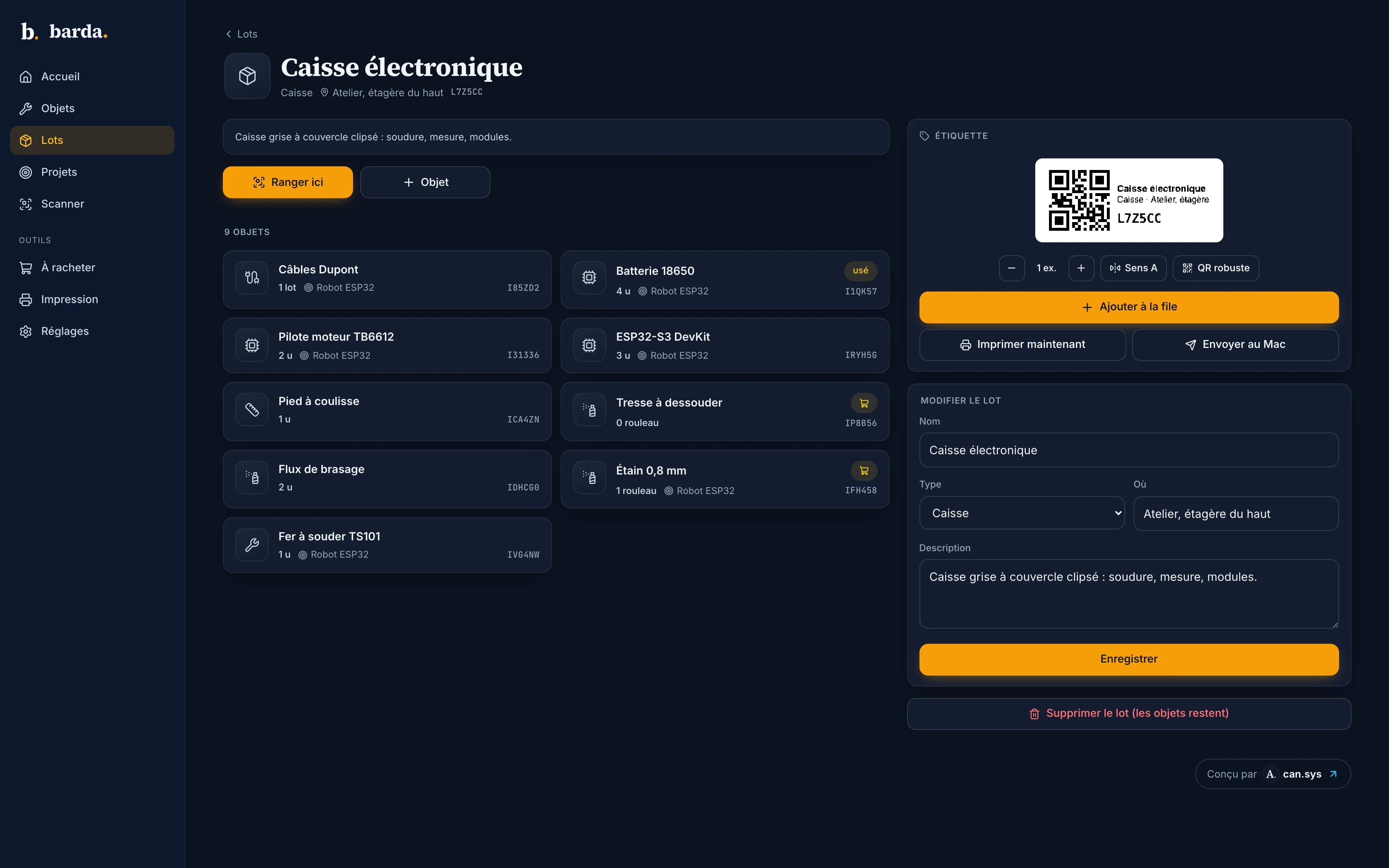
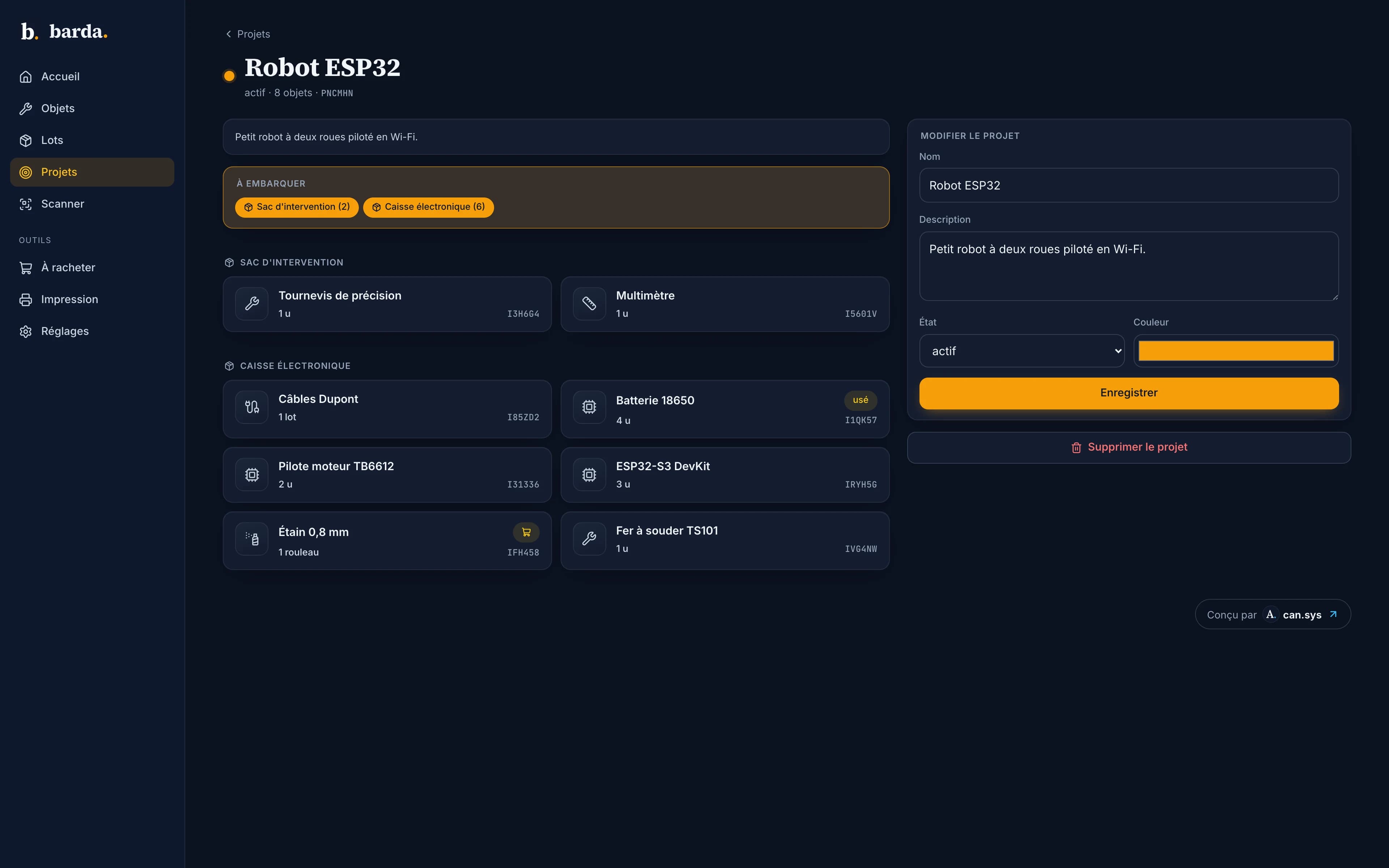
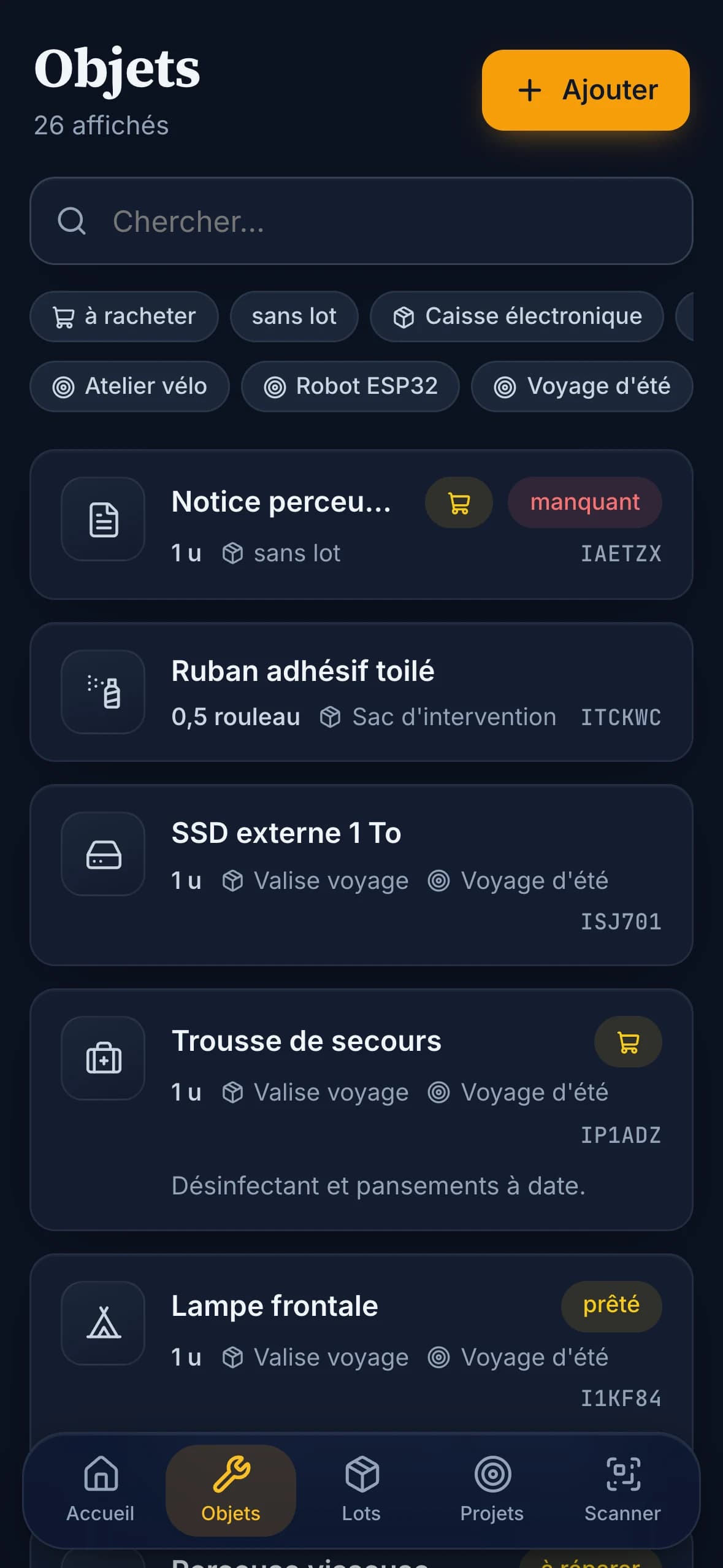
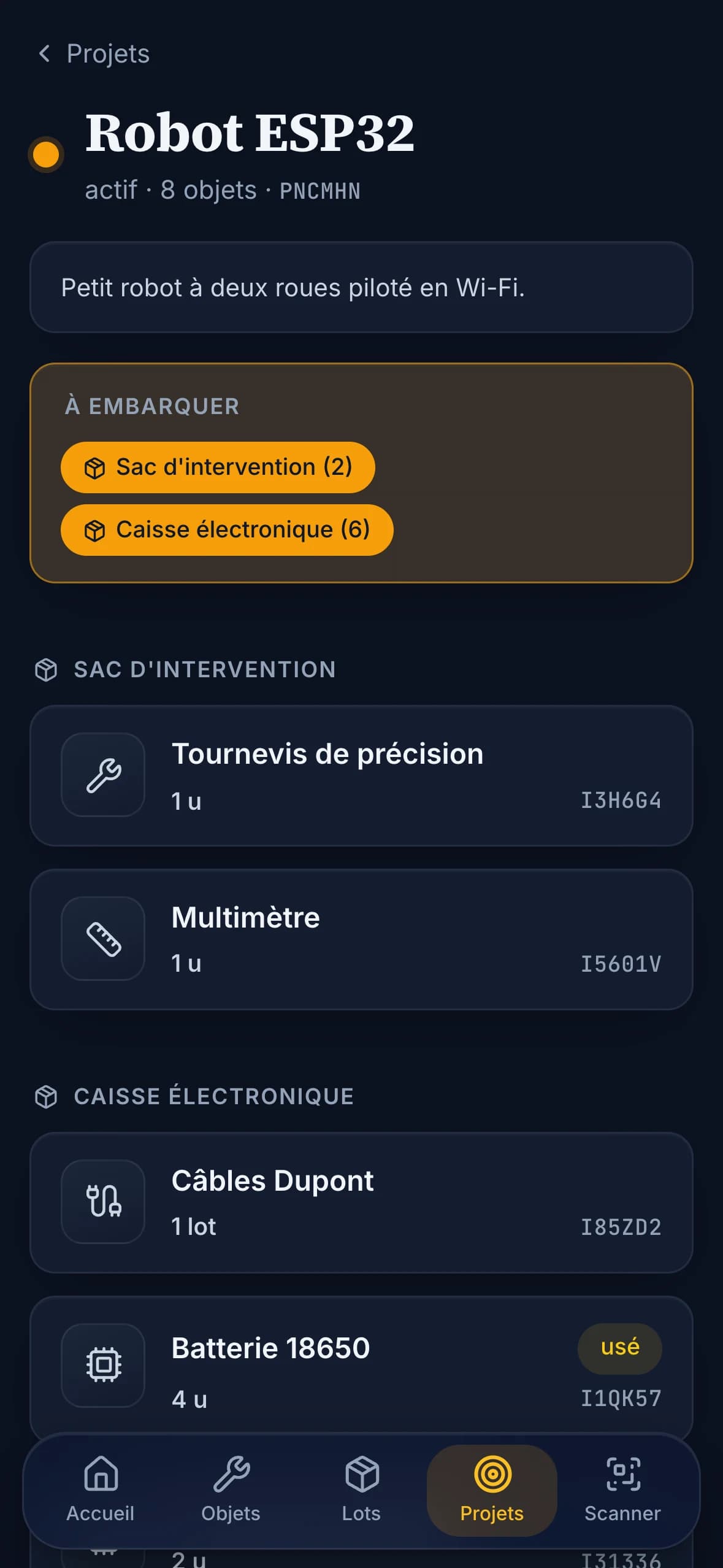
A demo mode opens the app on a made-up inventory, read-only, with the lock on the server side. It runs online at showcase-barda.can-ali.fr; the screenshots on this page come from that mode.
The guardrails
Claude can look up and tidy the inventory over MCP, with fifteen tools. None of them can delete anything: the worst it can do is put a screwdriver in the wrong place.
 A finance assistant