
 VRI Technologies
Where it started
At VRI, every quote starts from dimensions, a material and a thickness, then goes through weight, work hardening, packing, transport and a cost price. All of that lived in a spreadsheet that few people knew how to read. As for the website, it didn't really show the product range.
What I did
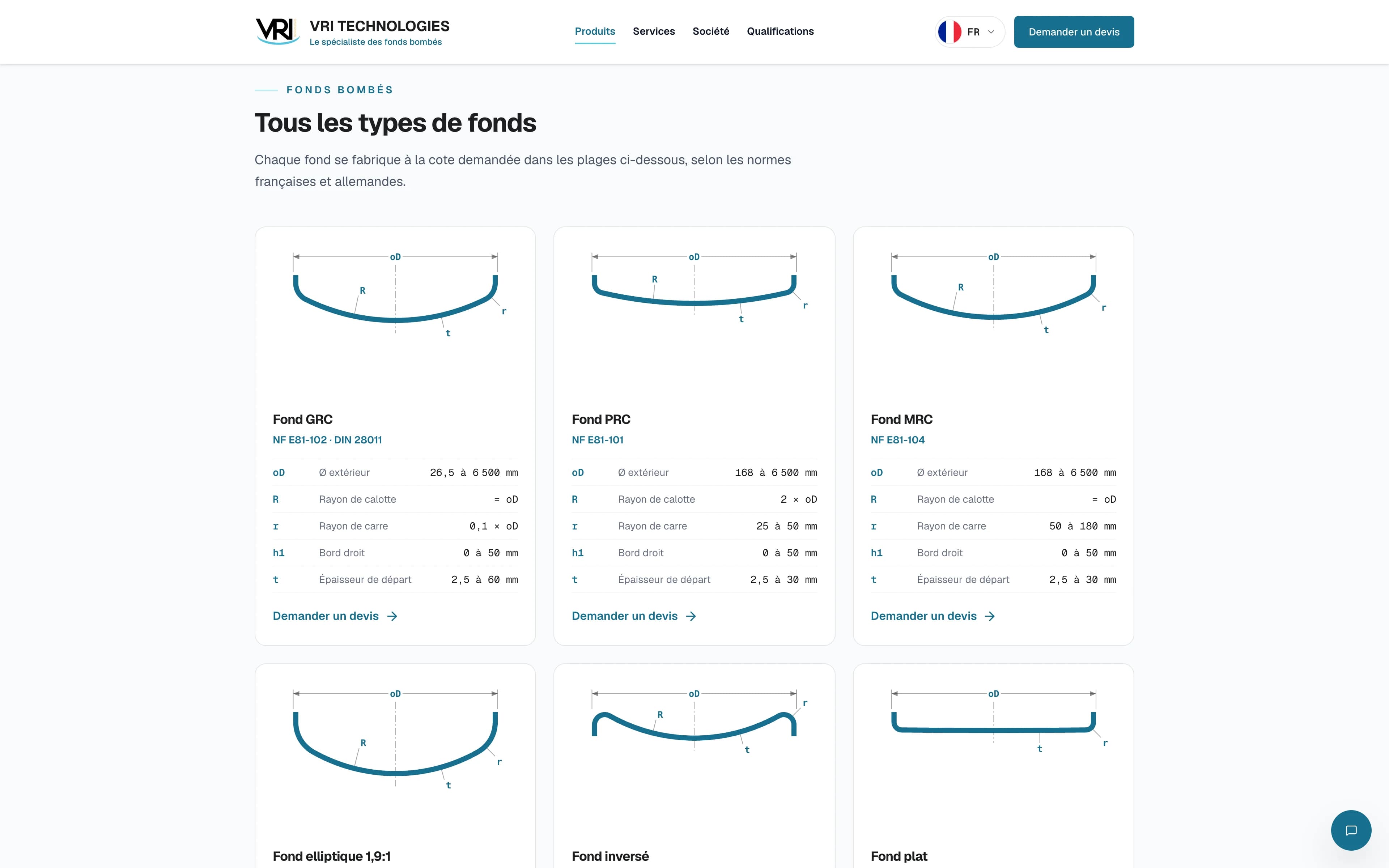
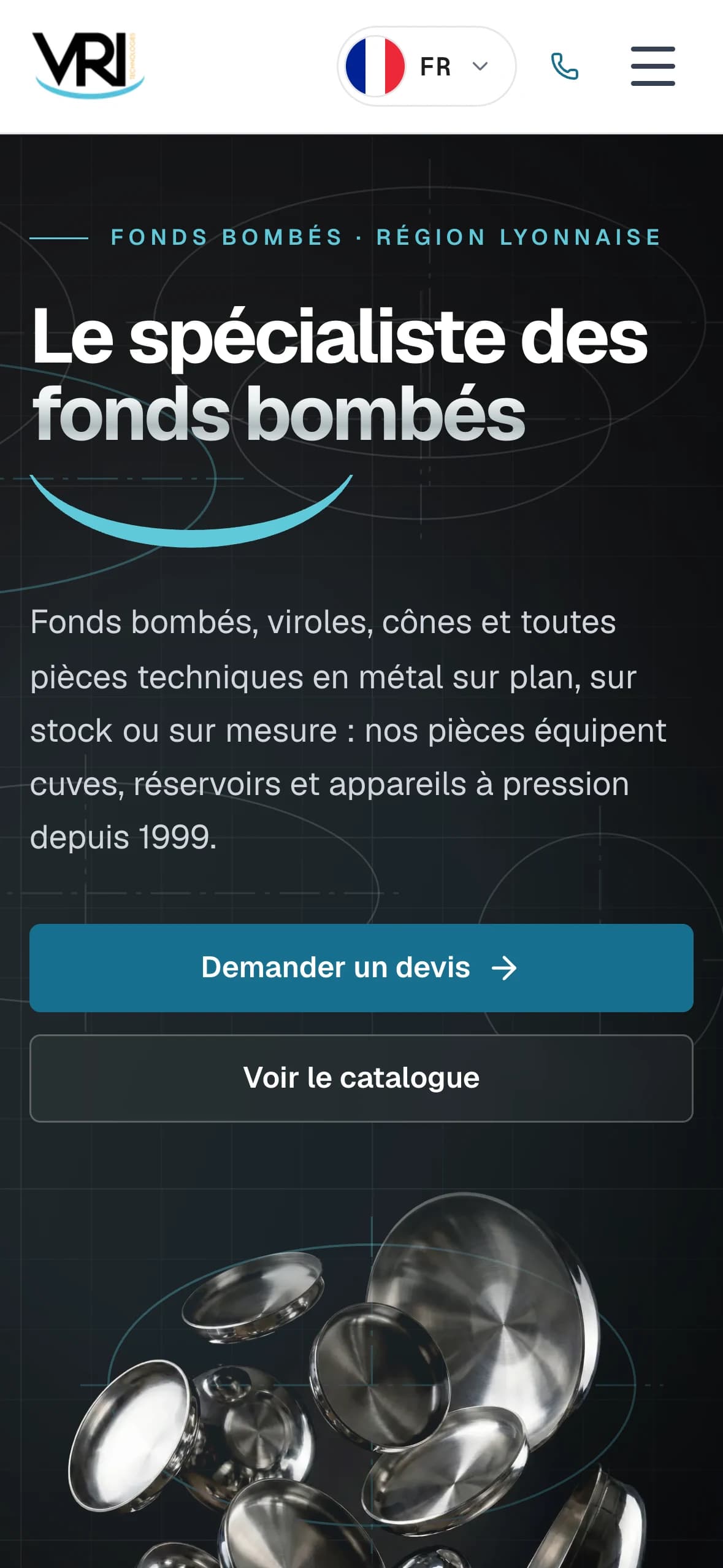
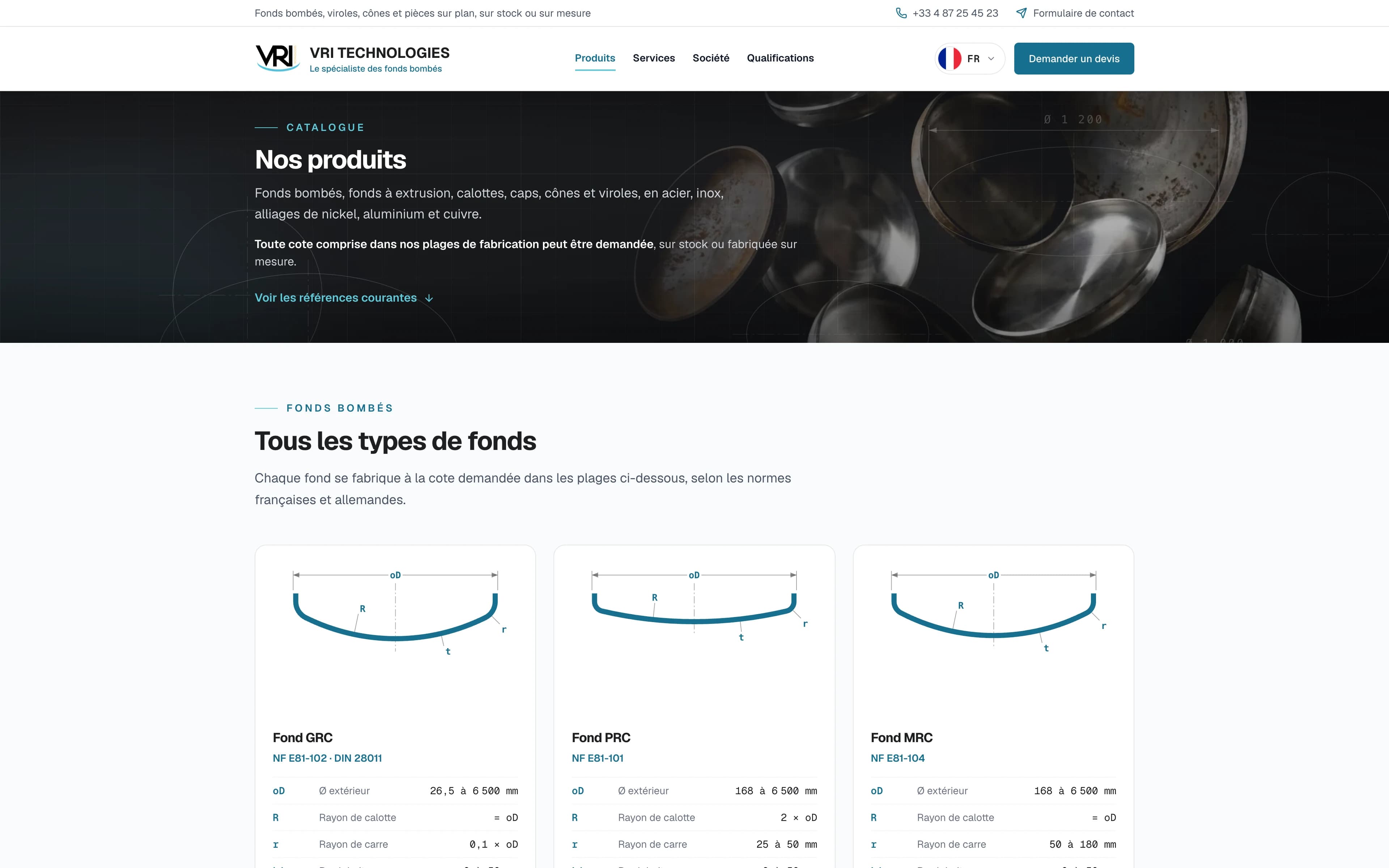
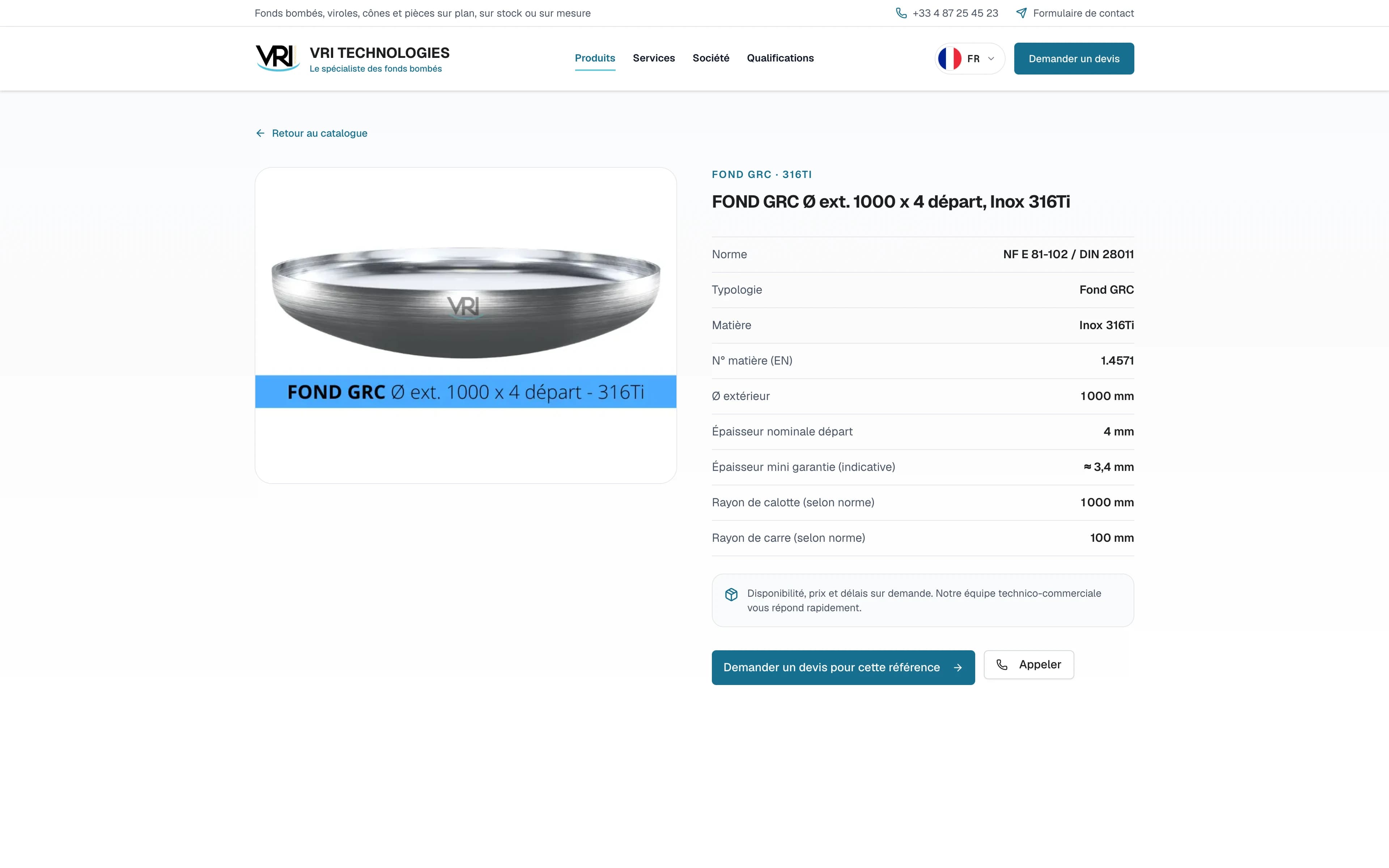
The website first: a catalogue where every part has its own drawn cross-section, in seven languages, with a contact form protected against bots. It runs on a server that I look after and monitor.
Then the quoting engine, in TypeScript. It takes the company's rules one by one and exposes them to an AI assistant over MCP, the protocol that connects a model to a company's tools. It's sales administration and CPQ work as much as code: I had to understand how a VRI salesperson prices a part before writing a single line.
The guardrails
The assistant doesn't calculate anything itself: it calls the tools, and the tools do the calculating. If a value is missing, it asks the salesperson; it doesn't make one up. The margin is never applied without a coefficient entered by someone at VRI, and every amount comes out marked “to be approved”. The quote stays a draft until a human has read it and sent it.
Today
The website is live. The quoting engine works; the interface for the sales team is the next step, with other digitalisation projects lined up behind it.

 3AM Solutions